Translation
Turn on red
How to make intersections with a permanent turn on red less dangerous.
 Alexander TatevyanText
 Anna AktaryanImages
In October 2026 the author added a section: what has changed since the article came out
Alexander Tatevyan, an engineer by training, has spent the last few years studying international best practice in urban infrastructure design.
Below are the problems he found while studying traffic law and practice in Armenia and abroad, and what he proposes to do about them.
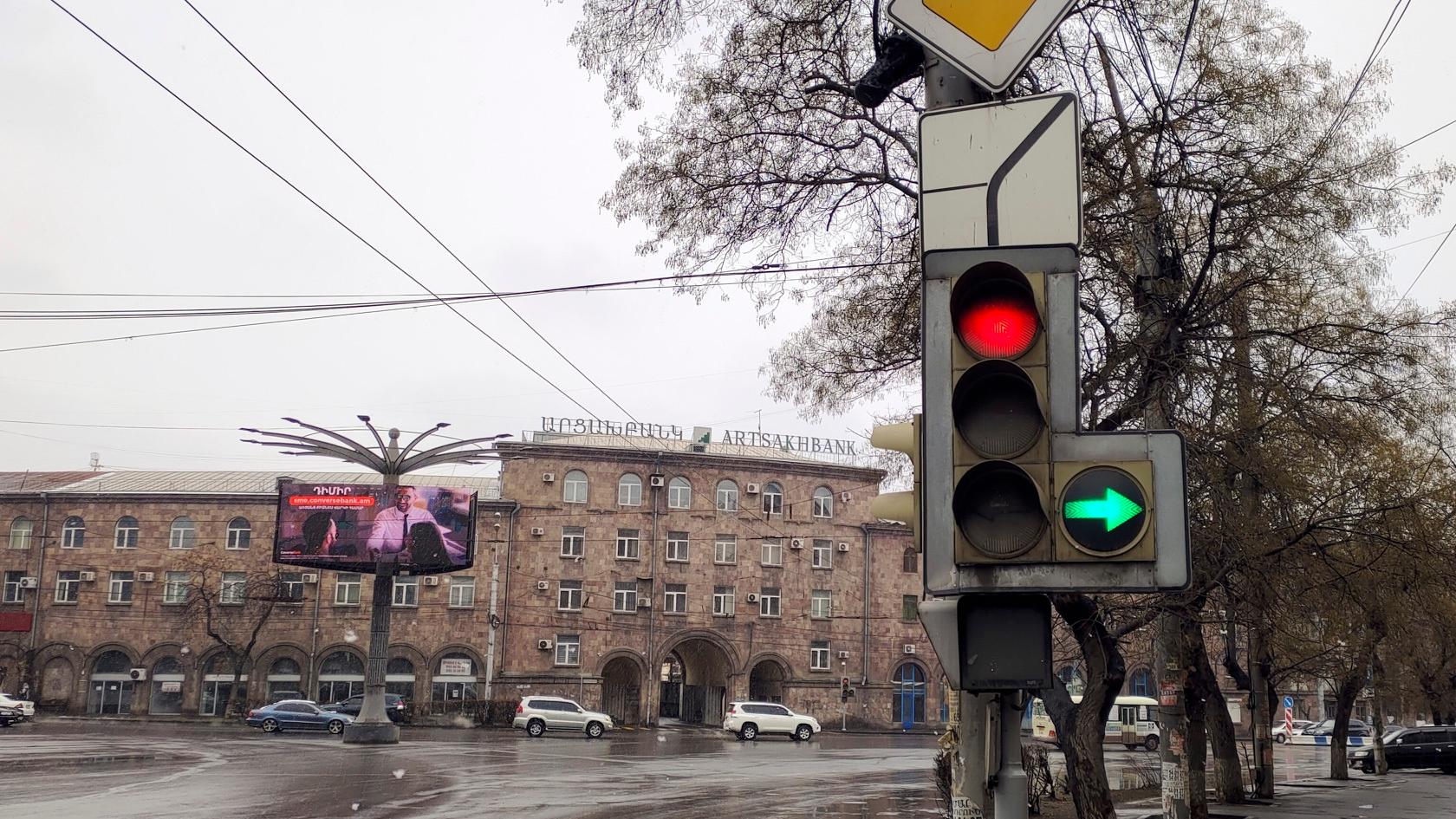
For more than ten years some signalized intersections in Armenia, above all in Yerevan, have run on a "permanent turn on red": drivers cross the crosswalk and enter the intersection without stopping, whatever the pedestrian signal shows. Lately the number of such intersections has grown sharply.
Other countries allow the turn too, among them Germany, Slovenia, Poland, Latvia, Ukraine and Uzbekistan.
Unlike them, Armenia permits the turn at these conflict intersections, where turning cars and crossing pedestrians get the go at the same time, with an additional signal section, a green arrow that stays lit all the time. That raises questions and causes problems.
The dangers
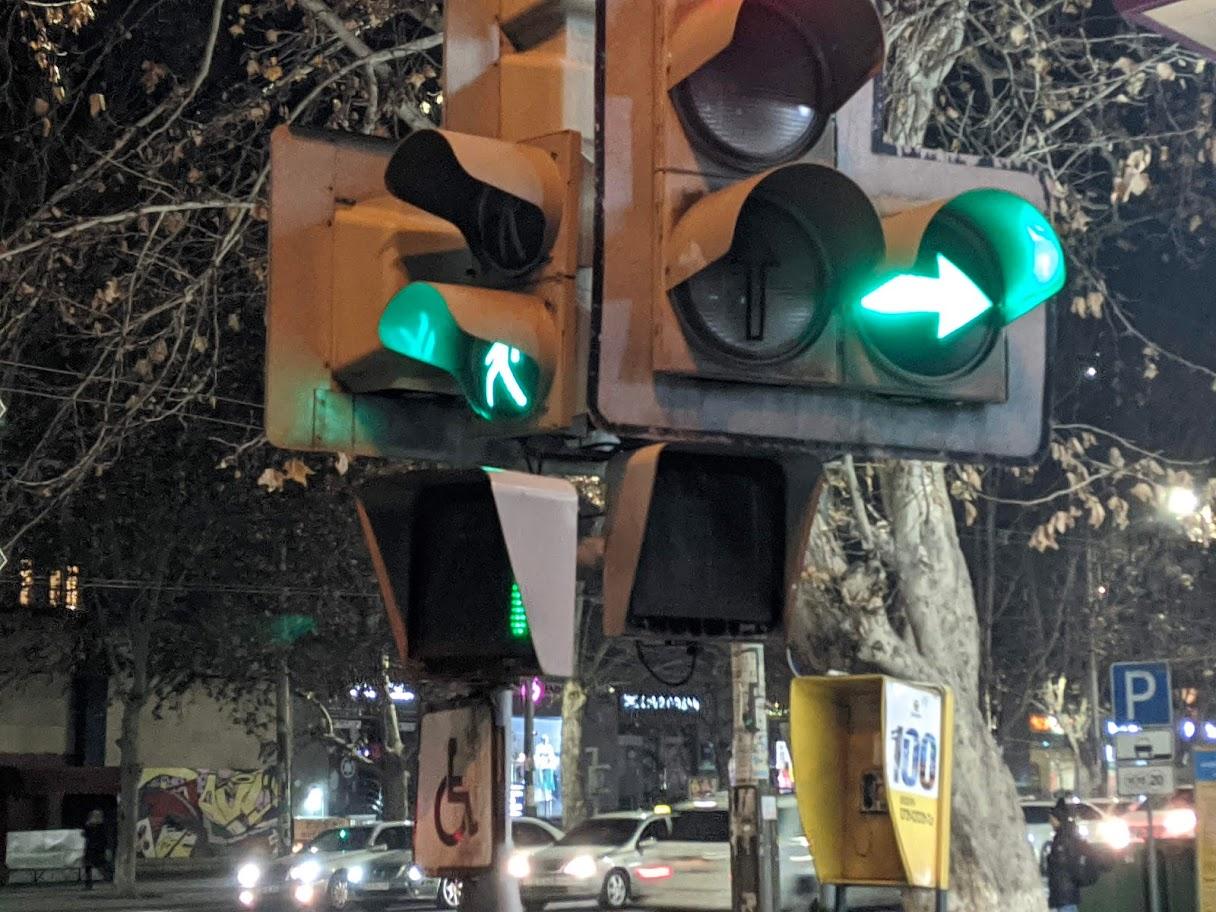
The turn endangers pedestrians, especially people with impaired sight or hearing. A driver approaching a conflict intersection cannot tell at a glance that it is different from one where the additional section switches on and off with the phases. Even a dark section says nothing about which kind of intersection it is, because it may simply be broken.

In practice, drivers and pedestrians alike get through a conflict intersection on habit and memory. After dark it gets worse: on a poorly lit crosswalk, the driver cannot see a pedestrian who suddenly steps onto it.
In some places huge billboards also hide the pedestrians waiting on the sidewalk. In bad weather (heavy rain, snow, black ice) stopping distances grow, and a car can even skid out of control. When all of this comes together, the result can be a tragedy. The videos below show exactly such situations.
A contradiction in the law
The current Road Traffic Rules of the Republic of Armenia (the Rules below), approved by Government Decision No. 955-N, set no clear requirement for drivers to yield to pedestrians before entering a signalized intersection.
Point 87 of the Rules reads:
When turning right or left, on leaving the intersection the driver must not impede pedestrians crossing the carriageway and must give way to cyclists riding on a cycle track.
Original
Աջ կամ ձախ շրջադարձ կատարելիս խաչմերուկից դուրս գալիս` վարորդը պետք է խոչընդոտ չստեղծի երթևեկելի մասը հատող հետիոտների համար և պետք է ճանապարհը զիջի հեծանվային արահետով երթևեկող հեծանվորդներին:
So under point 87 the driver has to yield only on leaving the intersection, at the end of the turn.
A driver moving in the direction of the arrow of an additional section lit together with the yellow or red signal must give way to vehicles coming from other directions.
Original
Լուսացույցի դեղին կամ կարմիր ազդանշանի հետ միաժամանակ միացված լրացուցիչ սեկցիայի սլաքի ուղղությամբ երթևեկող վարորդը պետք է ճանապարհը զիջի այլ ուղղություններից ընթացող տրանսպորտային միջոցներին:
Point 91 does not mention pedestrians at all.
At regulated pedestrian crossings, once the traffic light turns to a permissive signal, the driver must let pedestrians finish crossing the carriageway in the direction they chose.
Original
Կարգավորվող հետիոտնային անցումներում, լուսացույցի թույլատրող ազդանշանը միանալուց հետո վարորդը պետք է հնարավորություն տա հետիոտներին ավարտելու ընտրված ուղղությամբ երթևեկելի մասի հատումը:
Point 105 covers only pedestrians who are finishing the crossing, not those about to start it. It also covers only a red that turns green, not a green that is lit all the time.
Where an obstacle or danger to traffic arises that the driver was able to detect, the driver must take steps to reduce speed, up to stopping the vehicle. Passing and going around are permitted in that case if the driver is certain it is safe for other road users.
Original
Երթևեկության համար խոչընդոտ կամ վտանգ առաջանալու դեպքում, որը վարորդն ի վիճակի էր հայտնաբերել, նա պետք է միջոցներ ձեռնարկի արագությունն իջեցնելու` ընդհուպ մինչև տրանսպորտային միջոցը կանգնեցնելը: Այդ դեպքում կողանցումն ու շրջանցումը թույլատրելի է, եթե վարորդը համոզված է, որ դա անվտանգ է երթևեկության մյուս մասնակիցների համար:
In effect, only point 67 of the Rules obliges the driver to yield to a pedestrian who has stepped off the curb into the road (to cross on their green). Yet a catch-all rule like this is meant for emergencies, and here it comes into play almost every time a driver has to brake hard to avoid hitting someone.
Road users left in the dark
Drivers from abroad have no way of knowing about this local quirk of signal control. That is a serious danger both to them and to foreign pedestrians, and there are more of both in Yerevan every day. Foreigners are often baffled by the practice and complain about it.
Solution
Given how dangerous this is, the author proposes that the city drop the "permanent turn on red" altogether wherever there are pedestrians, and move to multiphase signal control, or even to modern smart signal systems.
As an interim measure, the city could follow international practice and replace the additional section at conflict intersections with a special sign, one already recognized in the EU and CIS countries that allow the same turn.
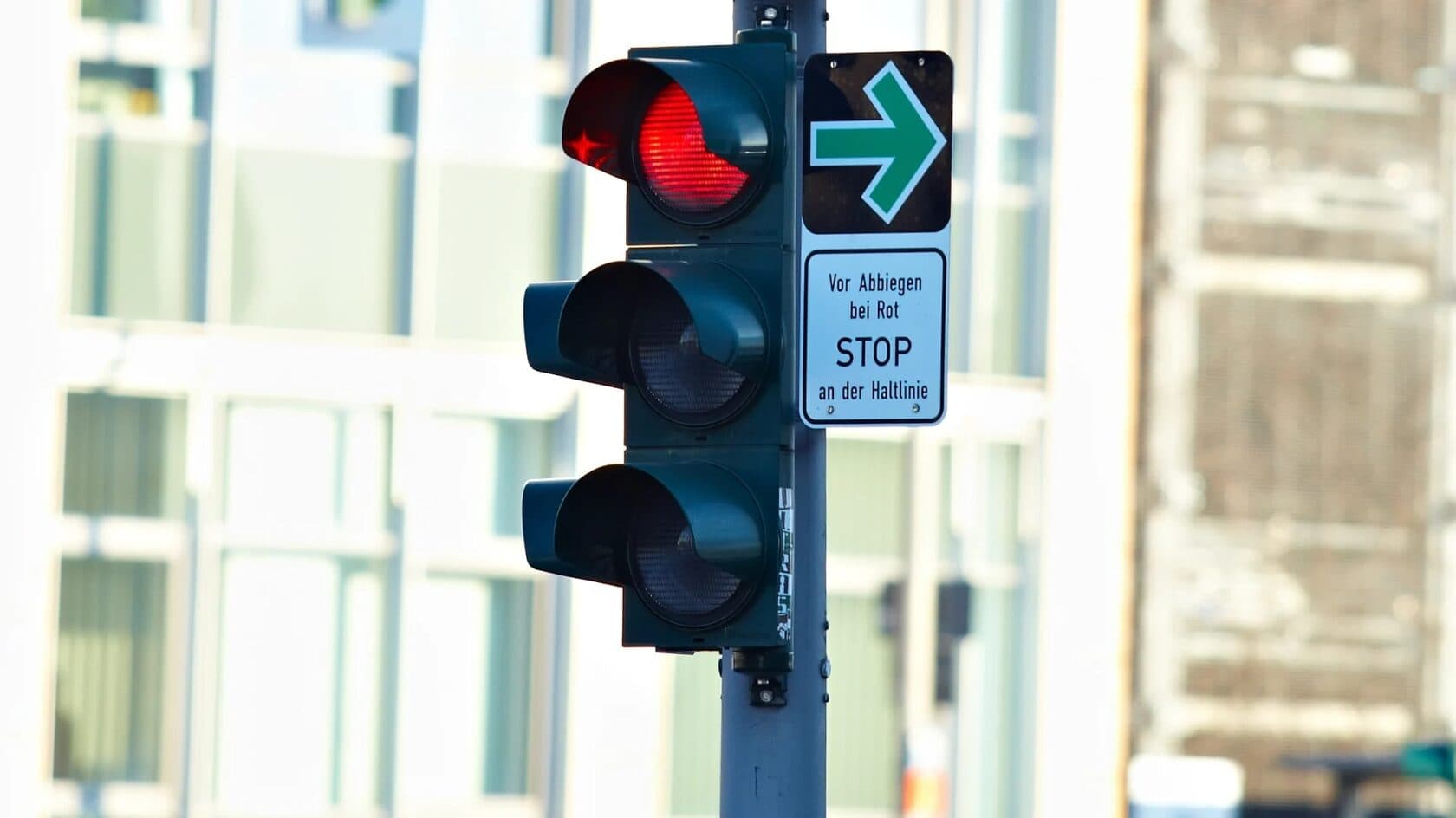
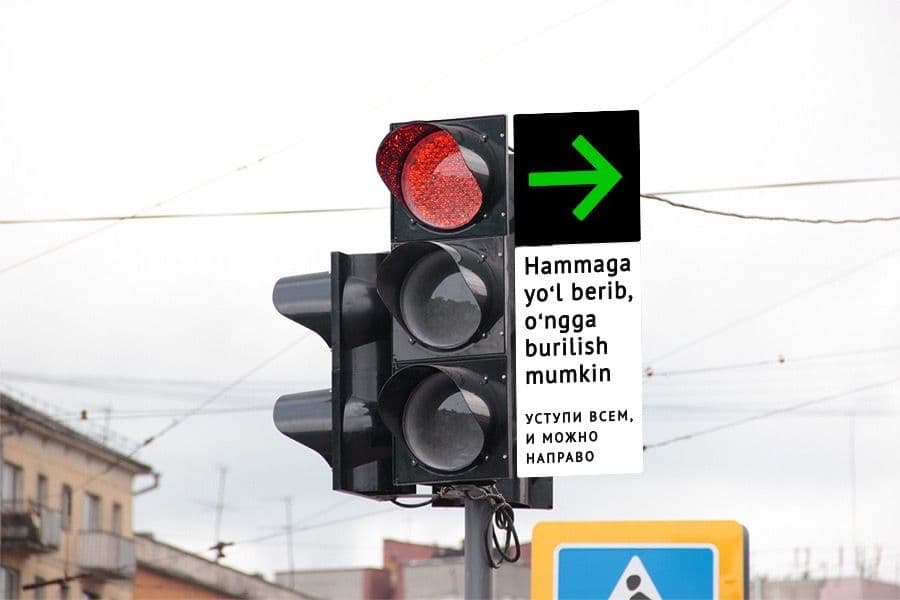
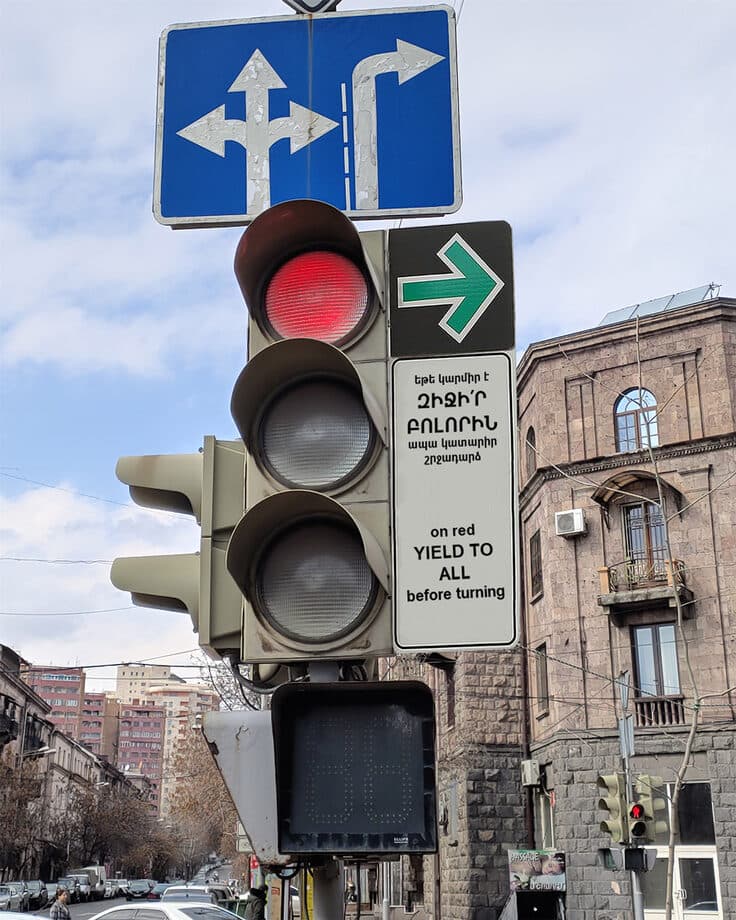
The black (or white) plate with a green arrow is mounted to the right or left of the signal head, level with the red light, and shows the direction in which a turn is allowed on red. It can be paired with a bilingual plate that explains it:
«Եթե կարմիր է, ԶԻՋԻ՛Ր ԲՈԼՈՐԻՆ, ապա կատարիր շրջադարձ»
«On red YIELD TO ALL before turning»
The Armenian line reads: "If it is red, YIELD TO ALL, then turn."
Point 91 of the current Rules should be amended to read: when moving in the direction of a green arrow mounted level with the red light of a traffic signal, the driver must slow down and give way to pedestrians and to vehicles approaching from other directions.
Ukraine has a similar rule in its Road Traffic Rules (16.9).
The sign alone does not fully solve the safety problem of a conflict intersection; it only reduces the risk to a minimum. Making such an intersection as safe as it can be takes a set of measures: a 50 km/h speed limit, a special flashing light that warns of pedestrians on the crosswalk, turns from one lane only, separated from the others by a refuge island, and bright, high-contrast lighting on crosswalks after dark.
Cost
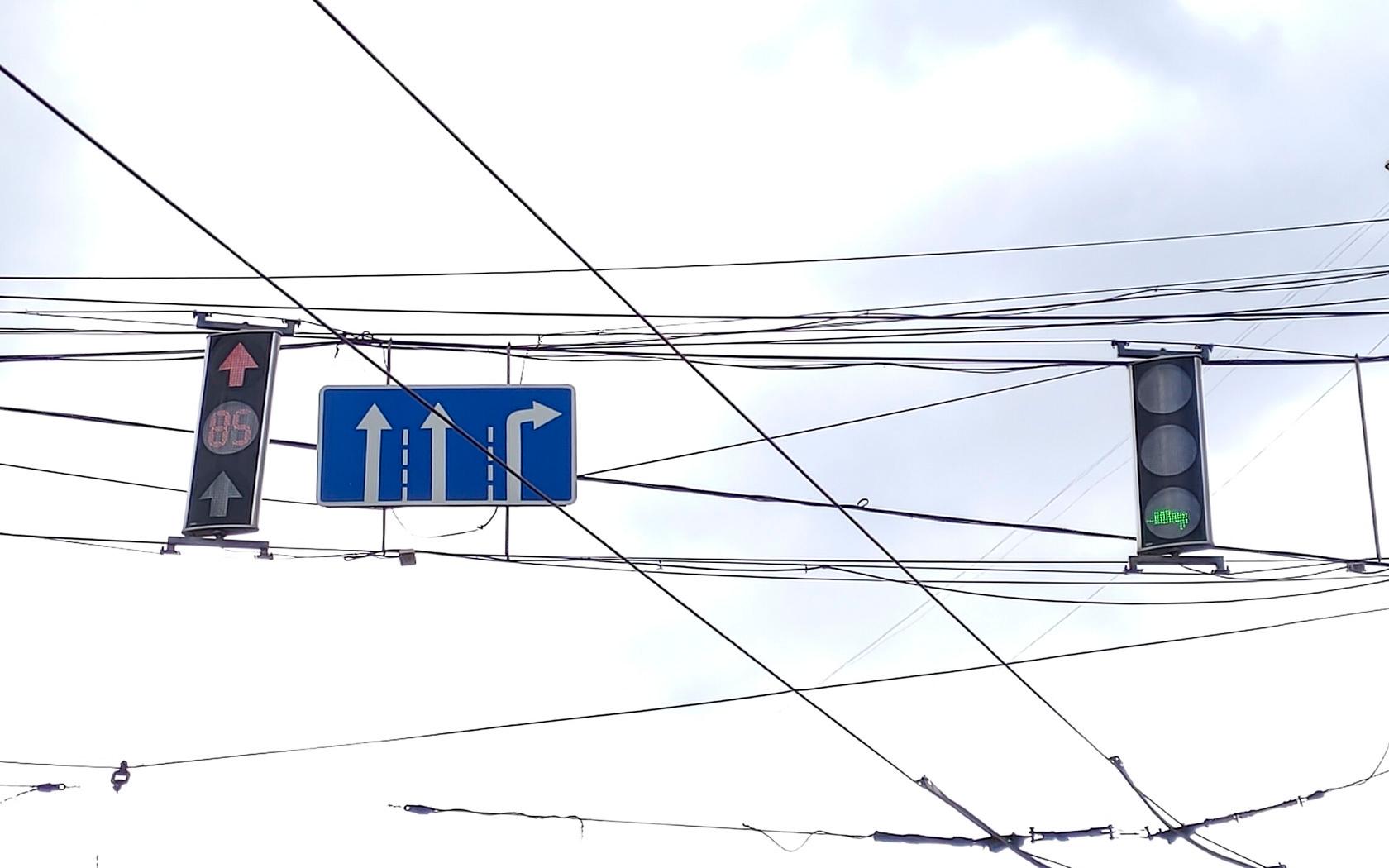
Today the sections are lit around the clock, and in some places a whole three-section signal head is installed just to use one section, which makes no economic sense. Running nonstop also wears the equipment out faster, another needless cost to the city budget. A sign needs no electricity and no maintenance.
What the sign would achieve:
- It tells the driver that this is a conflict intersection, because an ordinary one has an additional section that switches with the phases, not a sign.
- With no green arrow lit, the driver sees only the red light, and slows down early without having to think about it, ready to stop.
- A driver who misses the sign after dark will simply stop, then notice it and go on safely. There is usually no congestion at night, so a sign that is hard to see on an unlit street will cause no trouble.
- Most drivers from abroad, especially from the European Union, already know this sign and what it requires.
- The turn gets a clear legal basis.
Solution
The standard additional section could be refitted, or replaced with a new type of section that shows three colors:


Flashing yellow: movement in the direction of the arrow is allowed only after yielding to pedestrians; it also warns that pedestrians are on the crosswalk.

Green: movement in the direction of the arrow is allowed.
The section can work in two modes:
- Conflict-free: while the pedestrian signal is red, the section shows green; while the pedestrian signal is green, the section shows red.
- Always open, or conflicting: while the pedestrian signal is red, the section shows green; while it is green, the section flashes yellow, starting a few seconds before the pedestrian green and stopping a few seconds after it. Drivers know in advance that there are pedestrians on the crosswalk, and pedestrians can start and finish crossing safely.
When traffic is gridlocked, the section switches to always-open mode.


The rest of the time, at night for example, it switches to conflict-free mode. A red light of its own also makes the section easier to see, and easy to tell apart from a broken one.
Author's addendum, October 2026
What has changed since the article came out
Written for yfp.am; it is not in the original on Urbanista.
The article was published on Urbanista in 2022. Here is what has changed since.
- The conflicting phases are still there. They still run at many intersections across Yerevan and in other Armenian towns. Only the locations have changed: some intersections lost them, others gained them.
- There is a new kind of additional section. Government Decision No. 71-N of 19 January 2023 added it to point 11 of the Road Traffic Rules:
Flashing information light sections in lunar white (yellowish) with the outline of a person and an arrow, which warn drivers that pedestrians are on the crossing, may be placed below a traffic light for vehicles.
Original
Թույլատրվում է տրանսպորտային լուսացույցի ներքևում տեղակայել լուսնասպիտակ (դեղնավուն) գույնի, մարդու և սլաքի ուրվագծով, թարթող տեղեկատու-լուսային սեկցիաներ, որոնք վարորդներին նախազգուշացնում են անցումի վրա հետիոտների գտնվելու մասին:
What is this section, and why does it fail to solve the problem and in places even make it worse?
Where the section comes from
It is the section with a lunar-white (in practice, more yellow) figure of a pedestrian and an arrow. It was designed by Moscow's Traffic Management Center (TsODD), which answers to the city's transport department, and installed there as an experiment from autumn 2018.
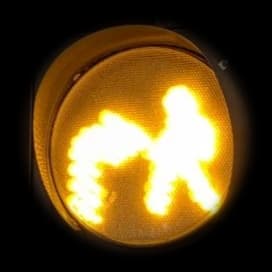
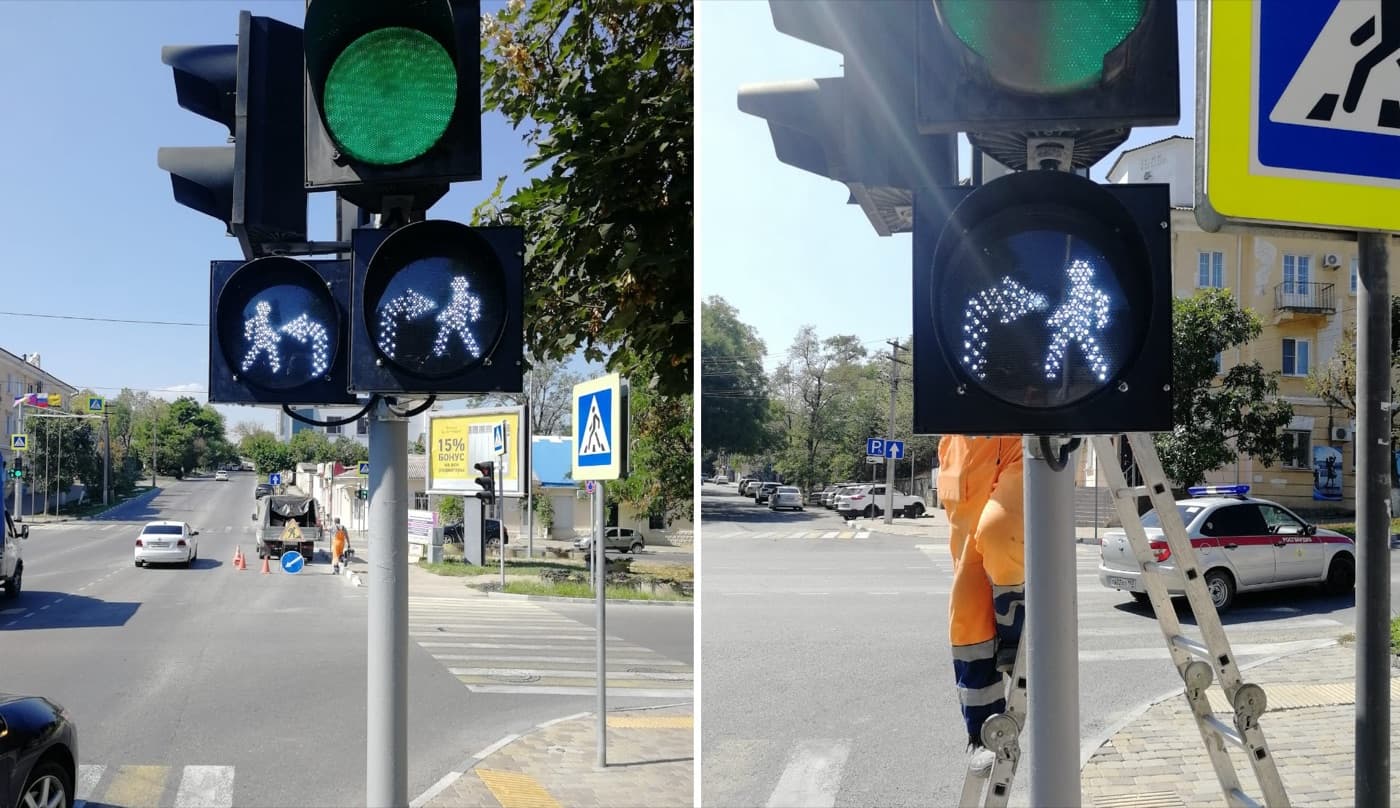
The sections in Russia: Novorossiysk, September 2022, during installation. They are white and light up together with the ordinary round green, with no extra arrow: the turn and the crossing run in the same main phase. Photo: Novorossiysk city administration, CC BY 3.0.
Source: admnvrsk.ruA change in the standard made it legal. In 2014 an outright ban was added to point 7.1.2 of the Russian standard GOST R 52289-2004: "Vehicle and pedestrian flows must not cross within one phase of the signal cycle." The 2019 edition, GOST R 52289-2019 (point 7.2.6), replaced the ban with permission under conditions. No more than 120 vehicles an hour may turn in one direction (since 2026, up to 600 if there are no more than 150 pedestrians an hour). A flashing lunar-white section must warn drivers of pedestrians on the crosswalk they are turning across, and it goes directly below the traffic light (point 7.4.12). Russia's traffic rules have described the section since 1 March 2023 (point 6.4).
The key point: the section warns of pedestrians on the street the car is turning into, that is, on the crosswalk it crosses as it leaves the intersection.
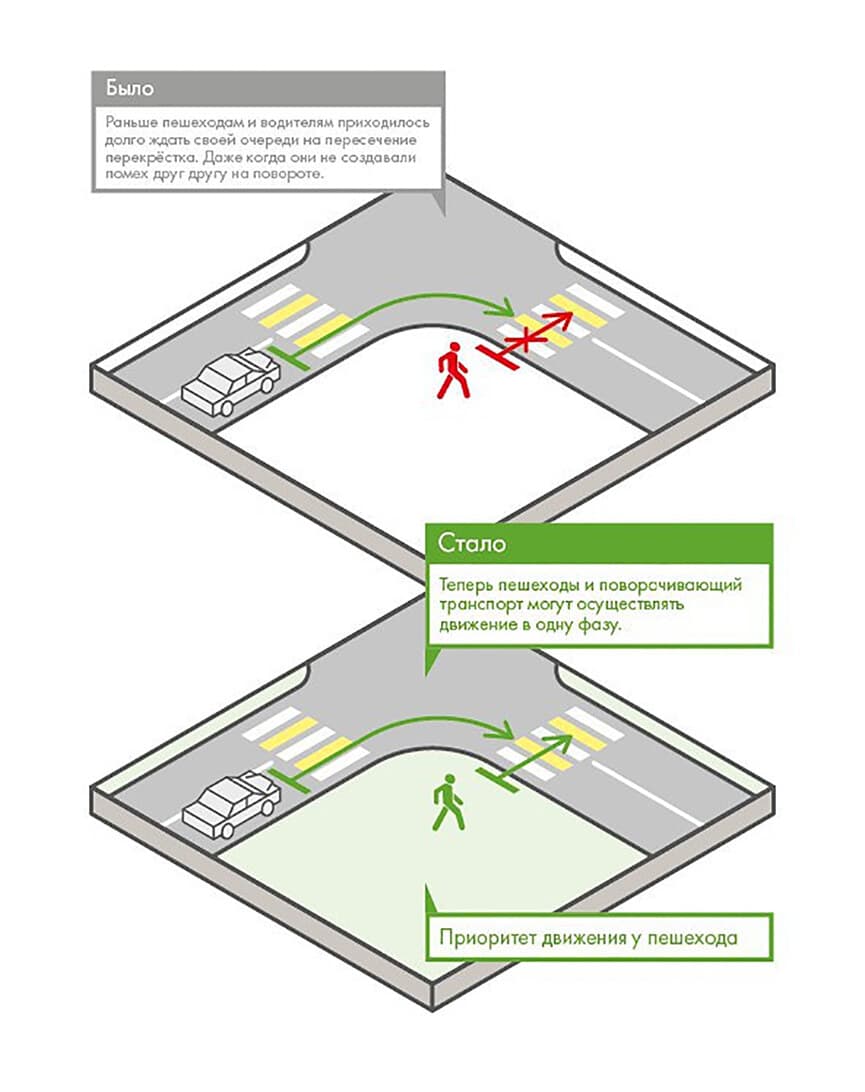
In the diagrams below, the dots are pedestrians: green ones are crossing on their green, red ones are waiting. To the right of the car is its traffic light, with the yellow figure-and-arrow section below it.
As intended. The car has a green light and turns right. Pedestrians have a green on the crosswalk across the street it turns into (circled), and the yellow section warns of them.
In Yerevan. The car has a red light and the always-on green arrow. Pedestrians have a green on the crosswalk before the intersection, which the car crosses before it even turns (circled), and the yellow section lights up with that green.
How the section came to Armenia
These sections were already up and working in Yerevan when, in November 2022, the Ministry of Territorial Administration and Infrastructure put them out for public comment on e-draft.am. The exchange with the ministry established two things:
- The section's purpose is to tell drivers that there may be pedestrians on the street the car turns into as it leaves the intersection.
- In practice the scheme is broken. Asked why the section lights up together with the pedestrian green on the road the car comes into the intersection from, the ministry replied that at some intersections (in fact, almost all of them) the municipality installs these lights as an experiment, and that every mismatch would be fixed once the draft was approved.
The draft was approved, and the "experiment" is still going on. It has no legal or documentary basis, and no one has set how long it runs or where.
The Armenian traffic rules still say nothing about what a driver must do while the section is lit, and their official text does not even show what it looks like.
Why the section makes the problem worse
- It does the wrong job, and the rules are silent. The section lights up against its own purpose, and the rules do not say what a driver must do when it is on. Two videos show what this looks like: the first and the second, filmed from the opposite side.
- There is no time to react. The section lights up at the very moment pedestrians get their green, with no lead time at all. A driver who is already at the crosswalk cannot slow down without slamming on the brakes. That is why in solution 2 the yellow starts flashing a few seconds before the pedestrian green.
- It adds to the driver's workload. One more section on top of the main signals and arrows overloads the driver, who then takes longer to decide.
- It goes up wherever it fits. Point 11 of the rules puts the section below the traffic light, but in practice it is hung beside it, above it, below it, or even well away from it. A driver with tunnel vision may simply not see it.
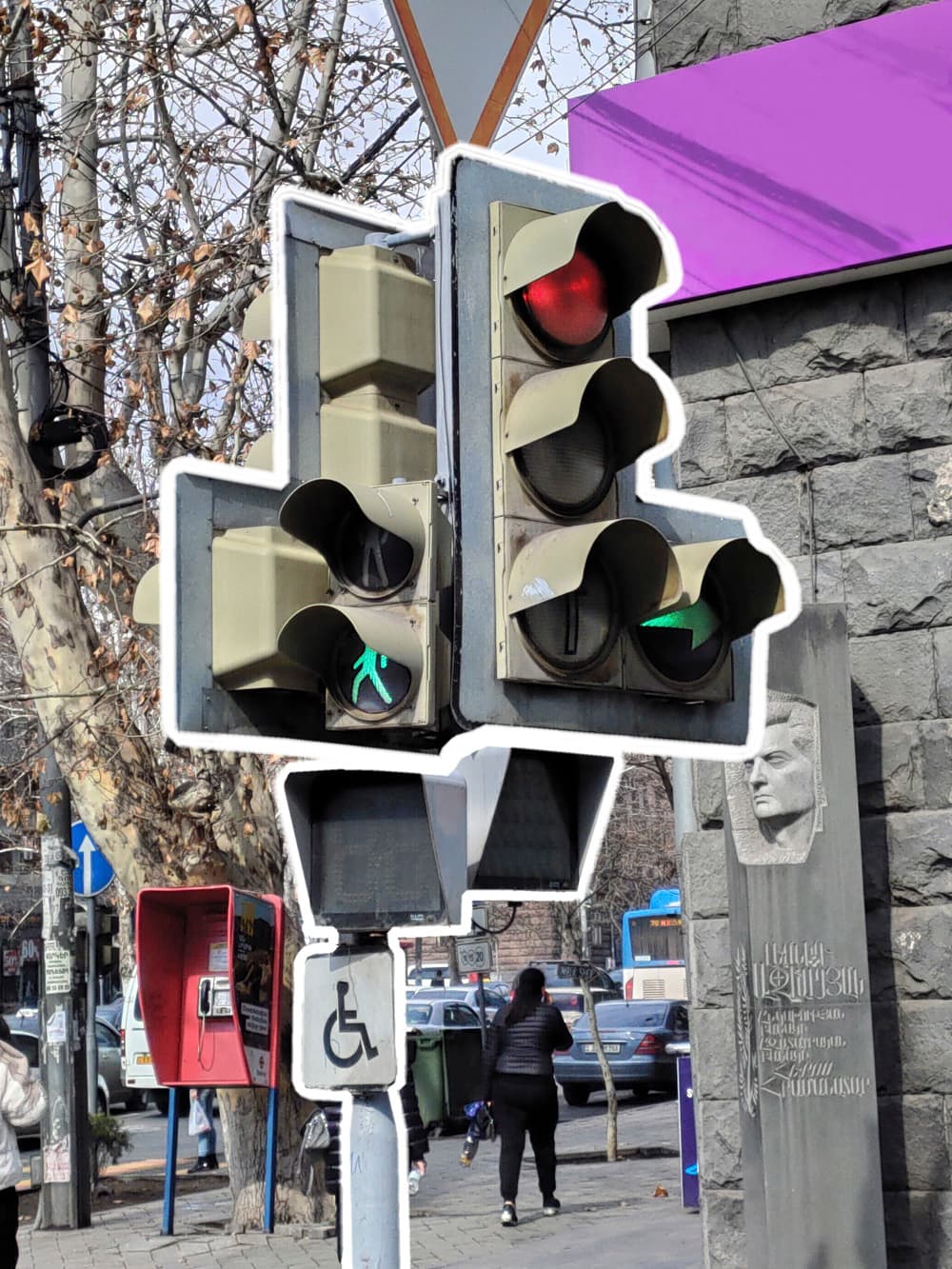
- It can break. The section is an electronic device, and it can fail. A driver will take a dark section to mean there are no pedestrians and misjudge the situation, and the risk of a serious crash goes up.
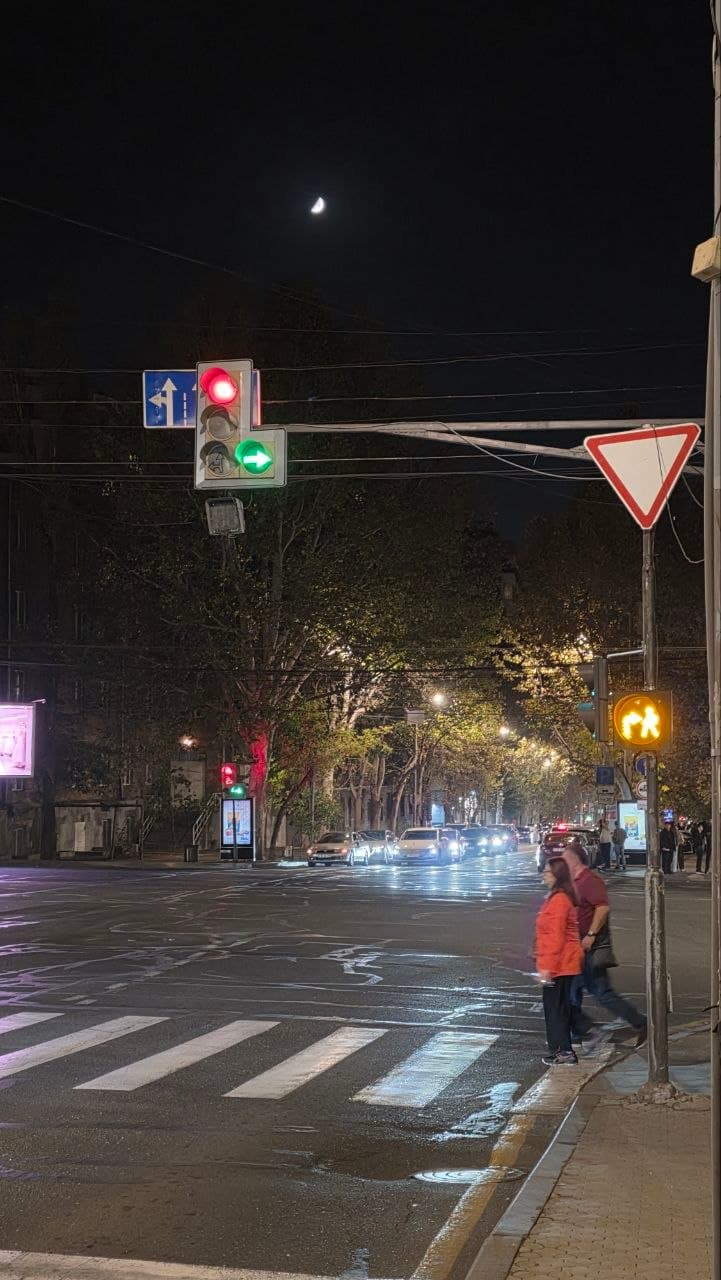
Point 4: the traffic light hangs over the intersection, and the section sits apart on a pole by the crosswalk. Photo by the author.
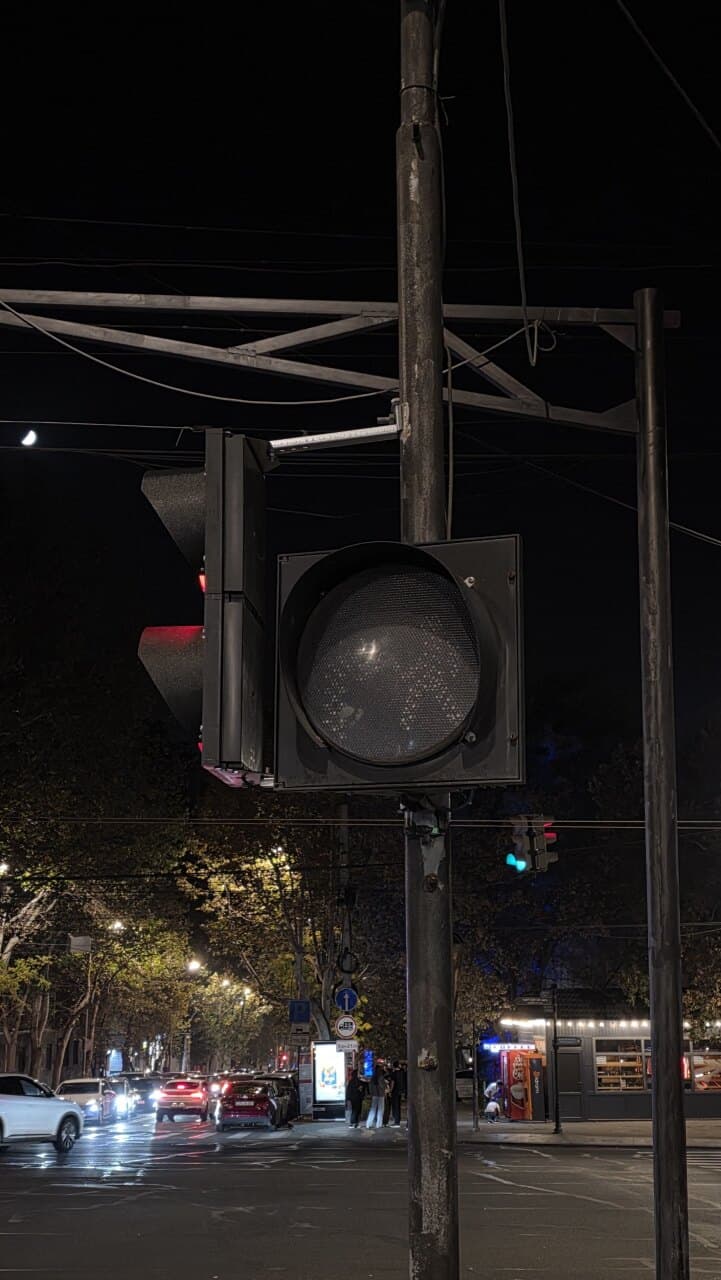
Point 5: the same section as in the flashing photo above, caught while it is dark. A broken one looks exactly the same, and a driver cannot tell them apart. Photo by the author.
Conclusion
By putting up warning "little men" instead of separating the conflicting movements, the authorities do not make traffic safer. They shift the responsibility for traffic management mistakes onto drivers and pedestrians.
We call on the Yerevan municipality, the Road Police and the Ministry of Territorial Administration and Infrastructure to stop unjustified and dangerous "experiments" on the roads. To actually reduce crashes, the contested signal schemes have to go altogether, and traffic management has to rethink its priorities. Two safer alternatives were proposed earlier as interim measures, the first and the second, but so far they have been ignored.
Further reading
- The author's comments on the government draft on traffic lights and the Road Traffic Rules
In November 2022 the Ministry of Territorial Administration and Infrastructure put amendments to Decisions N 1699-N and N 955-N up for comment on e-draft.am. Alexander Tatevyan left four comments; the ministry answered each of them. The whole exchange is translated here.
- Arkadiy Gershman on Yerevan's permanent arrow
From the video "Yerevan: an ancient city and new problems", January 2022, in Russian. From 37:06 the urbanist takes apart the right turn on a green arrow while pedestrians have a green light: why drivers do not expect a pedestrian there, and where US cities allow it.