Master plan & city governance
Urban governance
Weak zoning enforcement, ad-hoc 'by phone call' decisions, and thin public disclosure are the root that enables spot construction, heritage loss, and land privatization. The city never built a coherent development strategy after 1991, and the 2024 master plan passed on a split vote with City Hall withholding full details.
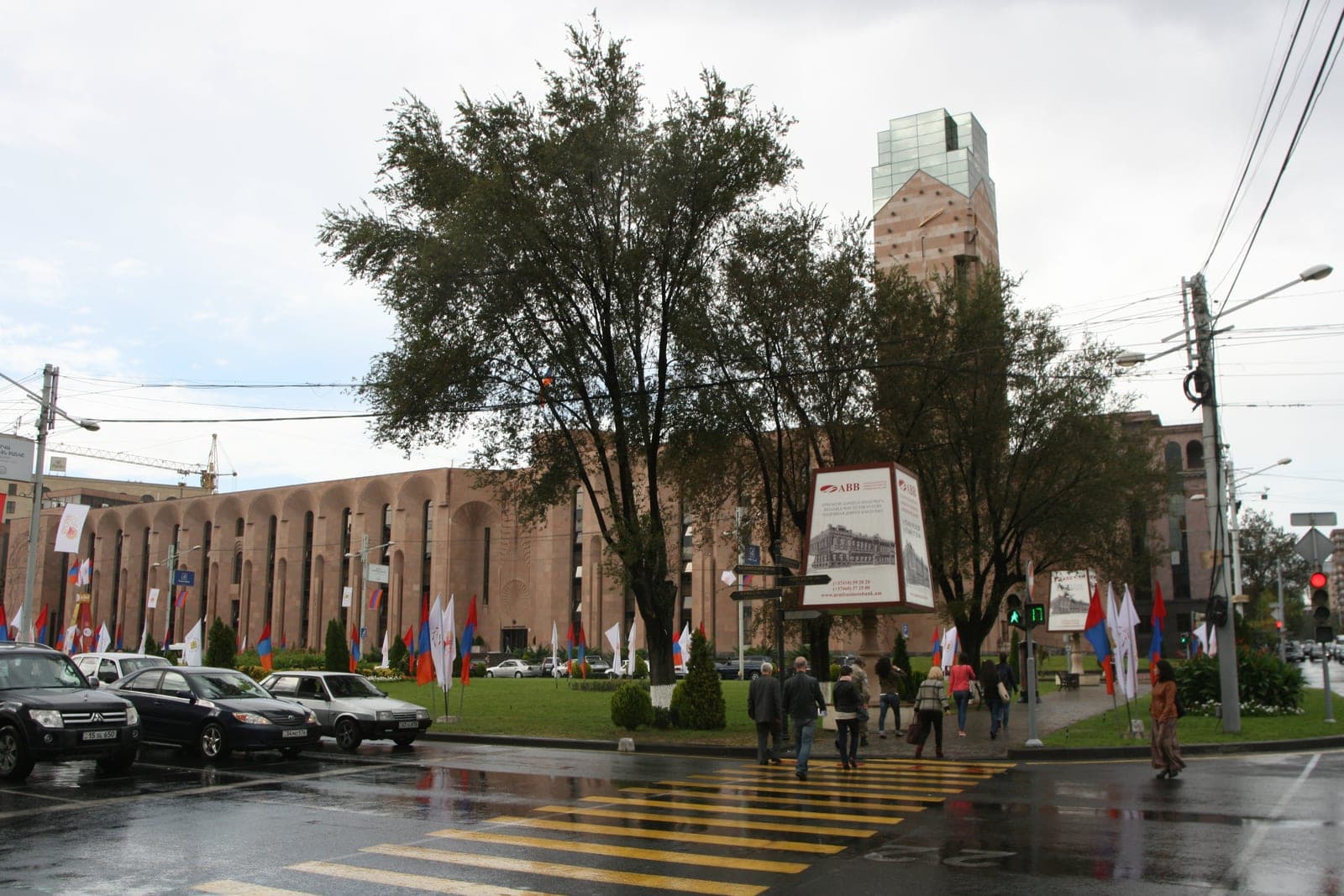
How it began
Before. Under the USSR the city was built out under a single, centrally approved master plan. After the Soviet collapse in 1991, Yerevan was left without a successor development strategy: construction and land-use decisions started being made ad hoc and behind closed doors, without public discussion.
What changed. The 2000 'Old Yerevan' redevelopment resolution set the pattern: sweeping decisions made from the top, favoring investors, over residents' objections — a template followed for decades since.
Timeline
- Origin
Yerevan without a coherent development strategy
After independence the city never got a successor to the Soviet master plan. For decades, territorial-development decisions were made without any coherent strategy — case by case, on an ad hoc basis.
- Decision
Yerevan's first post-Soviet master plan is adopted
Government Decision No. 2330-N of 15 December 2005 approved Yerevan's first post-Soviet master plan — for a 15-year term, to 2020. Even before adoption, in November 2005 the press mocked its population and density projections as a 'city of dreams' and warned its green-space and transit targets would go unmet.
- Development
Yerevan's chief architect is replaced (2011)
Yerevan's chief architect Mikayel Hasratyan left his post — officially at his own request; the press tied it to his disagreement with a slate of capital construction projects. The first in a recurring churn of this key position.
- Development
'The master plan legalizes the illegal'
During a revision of the master plan, architect Gurgen Musheghyan stated plainly that each adjustment retroactively legalizes the prior years' unauthorized construction, emptying the plan of meaning. An early record of the mechanism the later legalization-for-revenue scheme would monetize.
- Development
Ex-cadastre chief: 'dilettantism and clannishness bordering on corruption'
Sarhat Petrosyan resigned as chair of the State Committee of the Real Estate Cadastre, publicly citing 'dilettantism and clannishness bordering on corruption' — a phrase that became emblematic of the institutional dysfunction in city governance.
- Development
Another turnover, then the chief-architect post is dissolved
Mayor Hayk Marutyan removed chief architect Artur Meschiyan effective 17 August 2020. By December 2020 a draft proposed abolishing the chief-architect post entirely, folding it into a deputy-mayor role — on the rationale that the architect lacked authority for 'political decisions'. The churn ended in dissolving the position itself.
- DevelopmentContested
Transparency International: the master plan is being hidden from the public
Through 2023–2024, Transparency International Anticorruption Center Armenia accused City Hall of withholding the full draft master plan and failing statutory public-disclosure requirements. Public discussion never got access to the detailed materials.
Transparency International Anticorruption Center Armenia · Sona Ayvazyan
- DecisionOngoing
Council of Elders approves new master plan
After eight months of drafting, the Yerevan Council of Elders approved the city's new master plan on a split vote — 32 in favor, 13 against, 2 abstaining. City Hall presented it as the first digitized, GIS-based master plan.
- MilestoneOngoing
Government approves 'Yerevan Downtown' on the site of Noragyugh
The government approved transforming the Noragyugh district into 'Yerevan Downtown': 155 buildings for roughly 65,000 residents across 83 hectares, with towers up to 70 storeys. The project is billed as a decade-long undertaking — the first major practical test of the new master plan.
Promises & what happened
- Hayk Marutyan — Mayor of Yerevan (2018-2021), Yerevan MunicipalityBroken
«A new master plan will be ready 'in two years': the mayor's advisor David Chgnavoryan called 1.5 years realistic but asked to 'keep two years in mind'.»
The plan was adopted only on 10 September 2024 — roughly 14 months past even the pessimistic 'two-year' estimate and three years past the 'realistic' one.
Claims & fact-check
- Tigran Avinyan — Mayor of Yerevan, Yerevan MunicipalityMisleading
«The 2024 master plan is the first digitized, GIS-based one, adopted through an open process.»
In fact: Transparency International accused City Hall of withholding the full draft and failing statutory disclosure; the vote itself was split (32/13/2).
Said: September 10, 2024 · ARKAChecked: September 10, 2024
Red flags
- Non-disclosure
City Hall withheld the full draft master plan and failed statutory public disclosure (2023–2024).
Yerevan Municipality, Transparency International Anticorruption Center Armenia
Connections
- Root ofTree cutting
Unqualified unilateral decisions and reclassifying 'replacement' as 'sanitary cutting' to bypass the law are a failure of city governance and oversight.
- Root ofDensification
Without a coherent master plan and systemic height-limit enforcement, City Hall approves overages case by case and then monetizes the violations through legalization — this is a failure of city planning, not a series of isolated incidents.
Key facts
- Genplan vote
- 32 / 13 / 2 (2024)
- 'Yerevan Downtown'
- up to 70 storeys, ~65,000 residents
- Strategy gap
- no coherent strategy since 1991
Sources
ARKA · Yerevan Council of Elders approves the capital's new master planarchive · August 13, 2025
Zartonk Media · Armenia approves new Downtown Yerevan project, transforming Noragyugh into a global hub with 70-story skyscrapers plannedarchive · May 18, 2026
EVN Report · On urbanization in Armenia: from city building to urban planningarchive · September 17, 2025
Кассационный суд РА (Arlis) · Court of Cassation ruling citing Decision No. 2330-N that approved Yerevan's 2005 master plan
ArmTimes / Hayastani Zhamanak · Master plan: the city of dreamsarchive · February 25, 2020
Azatutyun (RFE/RL) · Yerevan's chief architect dismissed from his postarchive · June 21, 2026
1in.am · Yerevan's master plan legalizes illegal constructionarchive · October 3, 2014
Iravaban.net · Yerevan's chief architect Artur Meschiyan to be dismissed effective 17 August
Hetq · A draft would replace Yerevan's chief-architect post with a deputy-mayor rolearchive · June 23, 2026
Armenpress · Yerevan Council of Elders approves the capital's master planarchive · May 12, 2025
Public Radio of Armenia · What Yerevan's new master plan is aboutarchive · October 5, 2024
Aravot · 'Yerevan will have a master plan in two years' — mayor's advisorarchive · September 26, 2023